info@gensolar.in
 +91 93987 35165


Why Does Solar Energy Generation Vary Throughout the Day? A Guide to Peak Production Hours
The solar energy is a clean and renewable energy source. Nevertheless, it cannot provide an equal production of energy during the day time. Many things can affect the productivity of solar panels, such as light intensity, weather, season, and the way how solar panels are installed. Understanding all these problems will let us utilize solar energy correctly.
1. What Factors Make the Production of Solar Energy Time Dependent?
The solar panels consist of the photovoltaic cells that convert solar energy into electrical one. The stronger the sunlight is and the more perpendicular the sun's rays are on the surface of the panel, the bigger quantity of electricity will be generated. The sunrays will fall perpendicularly on the surface of solar panel in the noon.
What Are the Optimum Solar Power Generation Hours?
The hours of optimum solar power generation will be as follows:
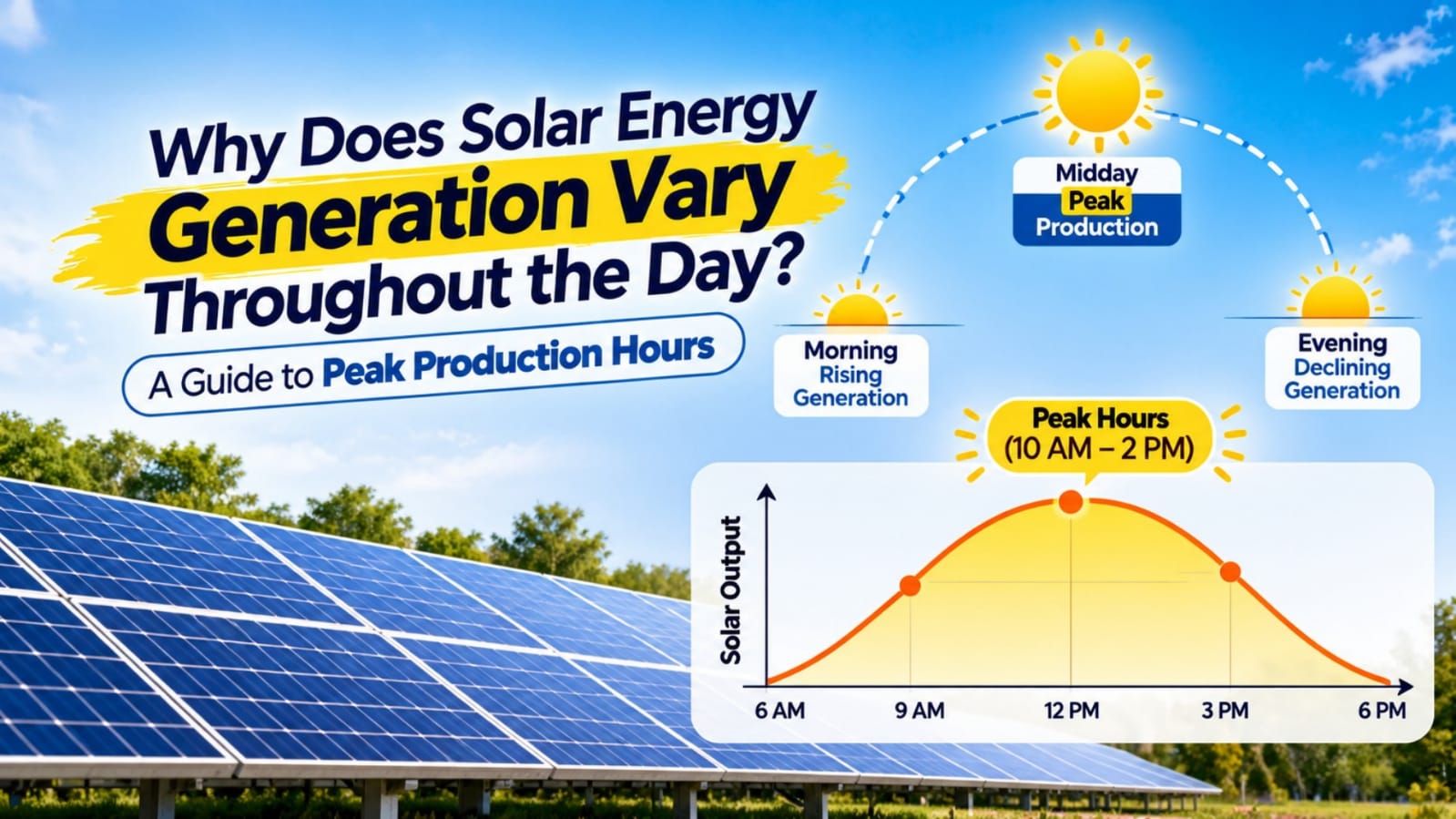
Morning (6AM – 9AM): Solar energy generation will begin from low levels and progress towards higher levels.
Midday (10AM – 2PM): Generation of solar energy will generally be highest since the sun rays would be most directly falling.
Afternoon (2PM – 5PM): The solar energy production will decrease as the sun’s position changes and becomes lower.
Evening and Night: Solar power generation will decline up to sunset and stop during night-time.
3. Factors Affecting Generation of Solar Energy
Sunlight Intensity: Cloudy weather usually means less solar energy generation, while sunny weather means high solar energy generation.
Temperature: The higher the operating temperature is, the lower the solar panel’s performance. Thus, sunny and hot days may mean lower performance than sunny and cool days.
Seasonal Factors: Sunny days that last longer generate more energy than days with shorter daylight hours.
Orientation and Angle of Panels: Well-angled and oriented panels imply that there would be sufficient sunlight falling on the panels. For instance, panels which face south are quite effective in India, but it all depends on a number of variables.
Shading and Dirt: Dirt and shading of the panels may reduce the efficacy of the panels.
What Are the Methods of Optimizing the Use of Solar Energy?
Use devices that consume a lot of energy in case there is enough sunshine on the panels. Find out the amount of energy generated by the panels using an inverter or through the solar energy tracking software. Clean the panels and ensure no shadows fall on them. Store the energy in your batteries to use later, and sell the extra energy generated to the grid.
Frequently Asked Questions (FAQs)
1. At what time do solar panels produce electricity?
Solar panels tend to produce maximum electricity when it is midday, as there is enough light present to run these solar panels. Nevertheless, the time varies according to the location.
2. Will solar panels produce electricity on a cloudy day?
Yes. These solar panels would still produce electricity from diffused light, but the amount produced is considerably lesser than that on sunny days.
3. Would solar panels produce electricity on a rainy night?
No. The traditional solar panels only produce electricity through sunlight and not other forms of energy. Batteries and grids must be utilized to produce electricity at night.
4. Is a high temperature advantageous in generating solar energy?
No, because solar energy generation is possible through sunlight but high temperature may not make the generation more efficient.
5. How can I improve the efficiency of my solar energy system?
Cleaning of the panels, no shading, proper installation and monitoring of the energy generation from the system.
Energy generation from solar systems depends on the time of the day because of the constant changes in light and environmental factors. Knowing when solar energy generation is highest and utilizing solar energy effectively makes it valuable.